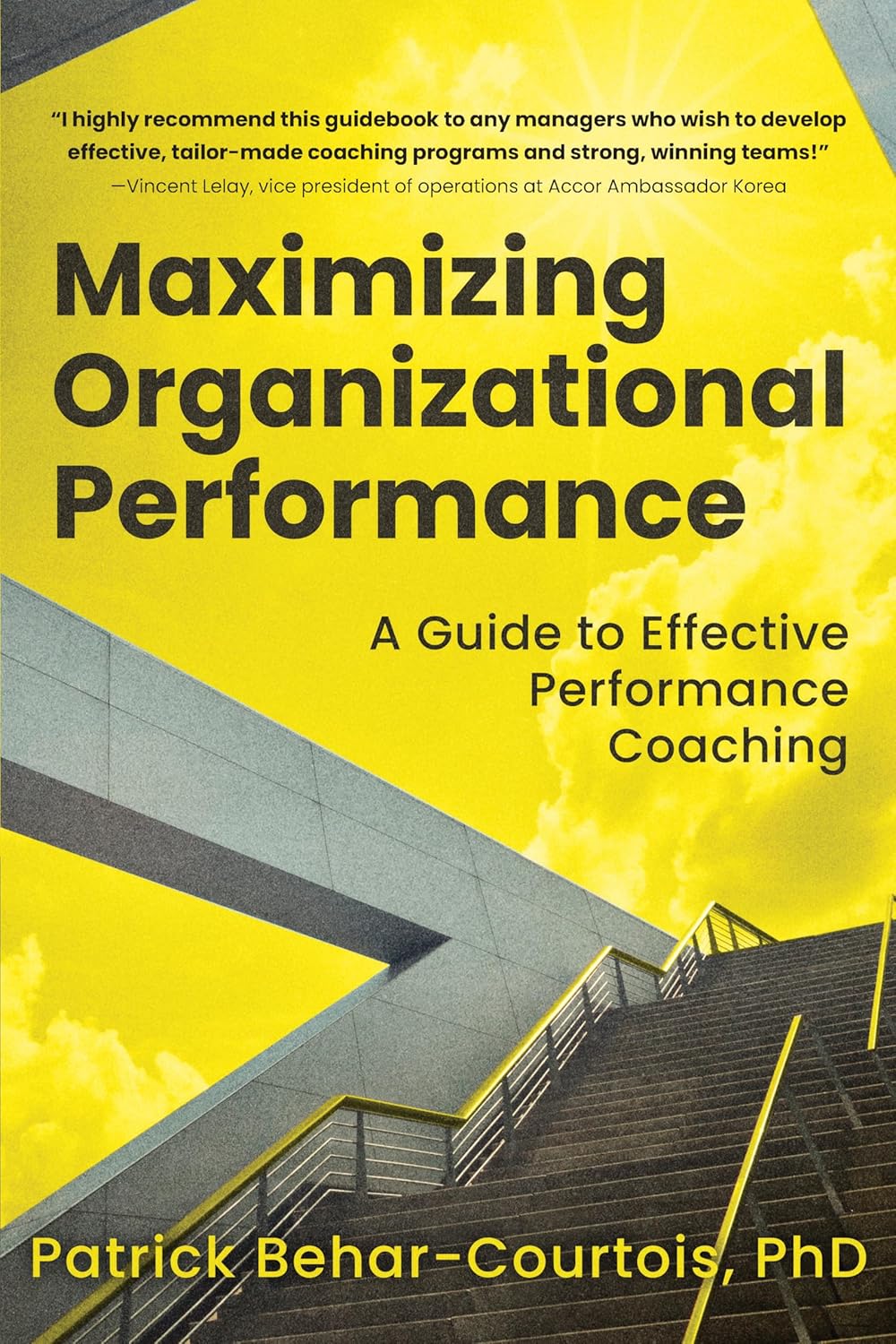
You’ve got the classics on your shelf, Whitmore’s GROW, Goleman’s EQ, and Collins’ flywheel, and they’ve shaped how you think. But here’s the truth: those books were written for a different era. Today’s workplace is hybrid, volatile, AI-infused, and talent is walking out the door faster than ever. Maximizing Organizational Performance: A Guide to Effective Performance Coaching doesn’t replace those masterpieces, it supercharges them with the practical, scalable, metrics-driven “how” that turns timeless ideas into real-world results. Below are expanded deep dives on comparisons with must-reads for coaching or leadership:

1. vs. Coaching for Performance by Sir John Whitmore

Sir John Whitmore’s Coaching for Performance is the foundational bible of modern coaching. It introduced the world to the GROW model and made the case that true leadership is about raising awareness and responsibility through questions, not instructions.

Key Similarities: Both books see coaching as the ultimate performance multiplier, emphasize powerful questioning over telling, promote self-generated solutions, and include real examples and tools to make ideas actionable.

Key Differences: Whitmore’s book is deeply philosophical and mindset-focused: it explores the inner shift from control to empowerment, the transpersonal aspects of coaching, and purpose beyond mere results. Maximizing Organizational Performance is relentlessly practical and organizational: it’s packed with implementation frameworks (scorecards, feedback loops, strengths mapping), ROI measurement, case studies from Fortune 500s and UN agencies, and direct guidance on hybrid/remote coaching, AI-enabled personalization, and data-driven plans. Whitmore teaches you how to coach one person beautifully; Maximizing Organizational Performance shows how to make coaching the operating system of an entire company.

How They Complement Each Other: Read Whitmore first to internalize the soul and philosophy of coaching: the “why” and the mindset that changed the profession. Then read Maximizing Organizational Performance to operationalize that philosophy at scale in 2026’s reality. The combination gives you both depth and breadth: profound individual impact plus measurable organizational transformation.

2. vs. Timothy Gallwey’s Inner Game Series

Timothy Gallwey’s Inner Game series (beginning with The Inner Game of Tennis in 1974) revealed how peak performance emerges when we quiet the critical inner voice (Self 1) and trust our natural abilities (Self 2), introducing concepts like non-judgmental awareness and relaxed concentration that became the DNA of modern coaching.

Key Similarities: Both books aim to remove interference so natural excellence can emerge, stress awareness and feedback as core mechanisms, and view enjoyment and trust (in self or others) as essential to sustainable high performance.

Key Differences: Gallwey’s work is introspective and psychological, rich with sports metaphors and Zen-like simplicity focused on the individual’s inner barriers. Maximizing Organizational Performance is outward-facing and systemic: concerned with organizational structures, team dynamics, metrics, and modern tools like AI coaching platforms and virtual feedback cycles. Gallwey helps you win the inner game; Maximizing Organizational Performance helps you roll that victory out across hundreds or thousands of employees.

How They Complement Each Other: Gallwey gives you the profound personal breakthrough on self-interference, essential for any coach or leader. Maximizing Organizational Performance then provides the bridge to apply those insights organization-wide with structure and measurement. Together they create a complete path: master your own inner game, then coach others to do the same at enterprise scale.

3. vs. Co-Active Coaching by Henry Kimsey-House et al.

Co-Active Coaching is the gold standard for professional life and executive coaching, built on the belief that people are naturally creative, resourceful, and whole, and that the coach’s role is to dance in collaborative partnership using curiosity, intuition, and deep listening.

Key Similarities: Both books are relational and empowering, reject directive styles, use tailored approaches, and include exercises and examples to develop coaching mastery.

Key Differences: Co-Active is holistic and humanistic: it spans fulfillment, balance, process, and the whole person (life as well as work), with heavy emphasis on intuition and emotional depth. Maximizing Organizational Performance is explicitly performance- and business-oriented: it prioritizes alignment with organizational goals, measurable outcomes, ROI tracking, and tools suited to hybrid teams, data analytics, and AI augmentation. One is about transformative human connection; the other about driving business results through coaching.

How They Complement Each Other: Co-Active trains you to be an extraordinary coach for individuals seeking wholeness and growth. Maximizing Organizational Performance shows how to deploy that skill inside companies as a strategic lever. Read them together and you become both a deeply skilled relational coach and a savvy organizational architect.

4. vs. The Coaching Habit by Michael Bungay Stanier

Michael Bungay Stanier’s The Coaching Habit distills coaching into seven punchy, habit-forming questions that help busy managers say less, ask more, and stop over-advising, all in conversations under ten minutes.

Key Similarities: Both push curiosity and questioning as the fastest route to empowerment, are highly practical, and aim to make leaders more effective by helping others think for themselves.

Key Differences: Stanier’s book is narrow, fast, and behavioral: focused on changing daily micro-interactions with memorable questions. Maximizing Organizational Performance is broad and strategic: full coaching programs, scorecards, cultural integration, metrics, and modern challenges like remote engagement and AI tools. One gives you a tactical habit; the other a complete operating system.

How They Complement Each Other: Start with The Coaching Habit to nail the everyday conversations; those seven questions will change your management style overnight. Then use Maximizing Organizational Performance to embed that habit into structured programs across the organization. You get immediate wins plus long-term systemic impact.

5. vs. Emotional Intelligence by Daniel Goleman

Daniel Goleman’s Emotional Intelligence uses neuroscience to prove that self-awareness, self-regulation, motivation, empathy, and social skills often matter more than IQ for success in work and life.

Key Similarities: Both recognize emotional and human factors as the true drivers of performance, treat these skills as learnable, and stress awareness, empathy, and relationships.

Key Differences: Goleman’s scope is vast: personal relationships, education, health, society, all,  with deep scientific explanation. Maximizing Organizational Performance applies emotional intelligence specifically to performance coaching inside organizations, adding metrics, tech integration, and current workplace realities.

How They Complement Each Other: Goleman gives you the compelling “why” and scientific foundation. Maximizing Organizational Performance gives you the workplace “how”: tools to develop EQ through coaching at scale. Together, these books offer science-backed understanding plus practical deployment.

6. vs. The 7 Habits of Highly Effective People by Stephen R. Covey

Stephen Covey’s The 7 Habits of Highly Effective People shifts readers from personality techniques to timeless character principles, moving from dependence through independence to interdependence via seven integrated habits.

Key Similarities: Principle-centered growth, proactivity, win-win thinking, empathy, synergy, and continuous renewal, all for sustainable effectiveness.

Key Differences: Covey’s habits apply universally across life domains; Maximizing Organizational Performance focuses narrowly on organizational coaching systems with 2026 tools (AI, remote, data).

How They Complement Each Other: Internalize Covey’s habits for personal character strength, then use Maximizing Organizational Performance to express those habits through structured coaching across your company. Together, these books offer a perspective where personal excellence meets organizational excellence.

7. vs. Good to Great by Jim Collins

Jim Collins’s Good to Great identifies the disciplined patterns (level 5 leadership, right people first, hedgehog concept, culture of discipline) that separate good companies from enduring great ones.

Key Similarities: Disciplined people and culture as the engine of sustained results.

Key Differences: Collins diagnoses patterns of greatness retrospectively; Maximizing Organizational Performance prescribes a specific lever, that is coaching, with modern tools for ongoing development.

How They Complement Each OtherUse Collins to understand what greatness looks like, then use Maximizing Organizational Performance to build it through people development in today’s environment.

8. vs. Extreme Ownership by Jocko Willink & Leif Babin

Jocko Willink and Leif Babin’s Extreme Ownership brings hard-won Navy SEAL combat lessons to business, hammering home one core idea: leaders must own everything in their world (no excuses, no blame-shifting) with principles like Cover and Move, Decentralized Command, and Prioritize and Execute driving victory in chaos.

Key Similarities: Both books demand ruthless accountability for results, treat leadership as the ultimate determinant of team performance, use gripping real-world stories (combat missions vs. global consulting cases), and see high-stakes environments as the true test of leadership.

Key DifferencesExtreme Ownership is intensely directive and military-flavored: top-down, no-nonsense, built on discipline and immediate execution in life-or-death scenarios, with a tone that can feel uncompromising. Maximizing Organizational Performance is collaborative and developmental: it emphasizes empathy, tailored growth plans, ongoing feedback loops, and tools that nurture ownership rather than demand it outright. It also weaves in 2026 realities: remote team dynamics, AI-supported coaching, data-driven personalization.

How They Complement Each Other: Start with Extreme Ownership to instill that ironclad “I own this” mindset. It’s motivational rocket fuel that cuts through excuses like a knife. Then bring in Maximizing Organizational Performance to grow and sustain ownership across your entire organization through structured, empathetic coaching. Jocko gives you the raw discipline; Maximizing Organizational Performance shows you how to develop the same accountability in others without burning them out. Together, you get battlefield intensity balanced with long-term cultural depth.

9. vs. Dare to Lead by Brené Brown

Brené Brown’s Dare to Lead is built on years of research into vulnerability, shame, and courage, arguing that daring leadership means rumbling with vulnerability, living clear values, braving trust (via her BRAVING inventory), and learning to rise after failure, creating cultures where people feel safe to be brave.

Key Similarities: Both are deeply human-centered, prioritize trust and psychological safety as the bedrock of performance, emphasize feedback and emotional awareness, and use personal stories to make concepts relatable and memorable.

Key Differences: Brown’s work is raw, emotional, and vulnerability-first: it dives into shame resilience, tough conversations, and whole-hearted living with a tone that invites you to feel as much as think. Maximizing Organizational Performance is pragmatic and systems-oriented: it translates those emotional foundations into concrete coaching structures (e.g., scorecards, tailored plans, ROI tracking, virtual platforms) while tackling current headaches like hybrid engagement and AI-augmented development. One opens hearts and builds courage; the other measures outcomes and scales the culture.

How They Complement Each Other: Read Dare to Lead first to embrace vulnerability as leadership super-power. It will change how you show up and create space for real conversations. Then layer on Maximizing Organizational Performanceto turn that brave culture into a repeatable coaching engine. Brené gives you the emotional courage; Maximizing Organizational Performance gives you the organizational machinery. The result? A workplace that’s both psychologically safe and high-performing.

10. vs. Leaders Eat Last by Simon Sinek

Simon Sinek’s Leaders Eat Last blends biology, anthropology, and powerful stories (from Marines to corporations) to show why great leaders protect their people first, creating a “Circle of Safety” fueled by chemicals like oxytocin and serotonin, where trust drives cooperation, innovation, and resilience against external threats.

Key Similarities: Both put people over short-term metrics, see trust and psychological safety as the ultimate performance multipliers, advocate servant leadership that prioritizes team well-being, and use compelling real-world examples to illustrate the cost of broken cultures and the payoff of healthy ones.

Key Differences: Sinek’s book is visionary and explanatory: it zooms out to evolutionary biology and big-picture “why” questions, critiquing modern stressors (like layoffs and metrics obsession) with an urgent, inspirational tone. Maximizing Organizational Performance is tactical and implementation-heavy: it provides step-by-step frameworks, feedback tools, data integration, and direct solutions for today’s specific challenges (e.g., remote isolation, AI disruption, talent churn). One paints the ideal culture; the other hands you the blueprint and tools to build it.

How They Complement Each Other: Let Sinek inspire you with the profound “why” behind protective, trust-based leadership. It’s the kind of book that shifts your entire worldview. Then pick up Maximizing Organizational Performanceto execute that vision through scalable coaching systems. Sinek creates the burning platform and the dream; Maximizing Organizational Performance delivers the practical roadmap. Together, you move from inspiration to sustained reality.

11. vs. The Five Dysfunctions of a Team by Patrick Lencioni

Patrick Lencioni’s The Five Dysfunctions of a Team uses a leadership fable about a struggling executive team to reveal the pyramid of dysfunctions: absence of trust, fear of conflict, lack of commitment, avoidance of accountability, and inattention to results. Then, it offers clear strategies to overcome them.

Key Similarities: Both identify trust and accountability as non-negotiable foundations, stress the need for healthy conflict and clear feedback, aim for aligned, results-focused teams, and use real stories to make the concepts stick.

Key Differences: Lencioni’s book is diagnostic and narrative-driven: the fable format makes dysfunctions painfully recognizable and memorable, but it’s primarily about spotting and fixing problems in leadership teams. Maximizing Organizational Performance is proactive and systemic: it focuses on preventing dysfunctions in the first place through ongoing performance coaching across the entire organization, complete with modern tools (e.g., virtual scorecards, AI insights, strengths-based plans) tailored to hybrid and global teams. One helps you heal a broken team; the other helps you build teams that rarely break.

How They Complement Each Other: Use Lencioni’s fable to quickly diagnose what’s going wrong in your leadership or project teams. It’s one of the fastest ways to get everyone on the same page. Then deploy Maximizing Organizational Performance to install a coaching culture that keeps those dysfunctions from returning. Lencioni gives you the mirror; Maximizing Organizational Performance gives you the maintenance plan. Read them together and you move from reactive fixes to proactive excellence.

The Big Picture

So, you’ve invested in the classics, and for good reason. From Whitmore’s groundbreaking GROW model to Gallwey’s inner-game psychology, from Goleman’s emotional intelligence revolution to Covey’s timeless habits, Collins’s disciplined greatness, Jocko’s extreme ownership, Brené’s courageous vulnerability, Sinek’s circle of safety, and Lencioni’s team dysfunction diagnostics, these books have shaped modern leadership. They gave us the profound “why”: why coaching unlocks potential, why emotions trump IQ, why trust and accountability are non-negotiable, why vulnerability and safety drive innovation, and why disciplined people and culture create enduring success.

But here’s the reality check in 2026: the world has changed dramatically since most of these books were written. We’re deep into hybrid and remote work, AI is augmenting (and sometimes replacing) human roles, talent retention is a crisis, data analytics are everywhere, and employees demand personalized development at scale. The classics inspire the mindset and diagnose the problems beautifully, but they were not designed to give you the step-by-step, metrics-driven, technology-integrated playbook for turning those ideas into a sustainable organizational system today.

That’s exactly where Maximizing Organizational Performance: A Guide to Effective Performance Coaching steps in. It doesn’t compete with the classics, it completes them and translates timeless principles into a modern, scalable coaching framework complete with:

  • Tailored coaching plans and one-on-one scorecards
  • Feedback loops and strengths mapping
  • ROI measurement and data-driven personalization
  • Virtual/hybrid implementation strategies
  • AI-supported tools and post-pandemic retention tactics

The classics provide the vision, philosophy, science, and diagnosis. Maximizing Organizational Performance provides the execution, structure, tools, and relevance for 2026 and beyond.

Read the classics alone, and you’ll be inspired and insightful. Pair them with Maximizing Organizational Performance, and you’ll be equipped; ready to embed coaching as your organization’s operating system, measure its impact, and deliver sustained high performance in a world none of those earlier authors could have fully anticipated.

If you love Whitmore, Goleman, Covey, Collins, Brown, Sinek, Lencioni, or any of the others, you already believe in human-centered, principle-driven leadership. Now make it real at scale. Maximizing Organizational Performance isn’t just another leadership book, it’s the necessary modern complement that turns your collection of timeless wisdom into measurable, future-proof results.

Add it to your shelf. Your teams’, and your organization’s, performance will thank you.

Recommended Posts