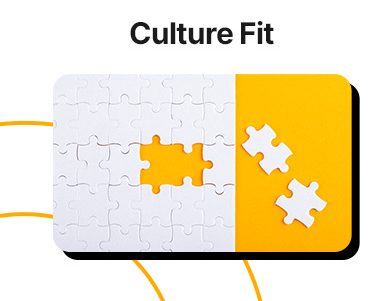
For years, culture fit was the ultimate hiring filter. The gut-check at the end of a process. The thing that converted a strong candidate into a no. “They’re technically great, but I’m not sure they’re the right fit for us.”
It felt responsible. It felt like protecting something important.
What it was actually doing, in most organizations I’ve worked with, is slowly making them more fragile without anyone realizing it.
Here’s the problem with culture fit as a hiring criterion: it is almost impossible to define rigorously, which means it defaults to something far more primitive. It defaults to familiarity. The candidate who reminds the interviewer of themselves. The person whose communication style feels comfortable. The individual who seems easy to work with because they don’t push back, don’t ask uncomfortable questions, and slot neatly into the existing way of doing things.
Over time, a team built entirely on culture fit doesn’t become a strong culture. It becomes a monoculture. And monocultures, in nature and in organizations, are spectacularly vulnerable to disruption.
I worked with a marketing agency a few years ago that was genuinely proud of their culture. Tight-knit team. Excellent internal relationships. Low conflict. High cohesion. They’d hired deliberately for fit across years and it showed. The team operated smoothly, communicated effortlessly, and got along exceptionally well.
They also hadn’t produced a genuinely original piece of work in about two years. Their client feedback was positive but flat. They were executing well and innovating not at all. When a competitor with a more diverse team, noisier, less harmonious, more argumentative, started winning the pitches they used to win, they couldn’t figure out what had happened.
What had happened was that they’d optimized so hard for comfort that they’d removed the friction that innovation requires.
The perspectives that challenge assumptions. The person who looks at the same problem from a completely different angle because their background is different. The team member who asks “but why do we do it this way?” not as a provocation but as genuine curiosity born of a different experience. These are not threats to culture. They are, when managed well, the engine of it.
What organizations actually need is not culture fit. It’s culture contribution, the capacity to hire people who bring something the existing culture doesn’t yet have, while still being able to work within it and add to it.
The distinction matters. Culture fit is a gate; it keeps things out. Culture contribution is an invitation; it asks what this person adds. One makes your culture consistent. The other makes it stronger.
This doesn’t mean hiring for difference for its own sake, or abandoning the genuine need for shared values and ways of working. It means being precise about what actually needs to match and what benefits from being different. Do they need to share your commitment to quality? Absolutely. Do they need to communicate the same way, come from a similar background, and feel immediately familiar? No. And confusing those two things is expensive.
The organizations I’ve seen build genuinely resilient, adaptive cultures are not the ones with the most harmonious teams. They’re the ones that learned how to make productive use of difference. How to have real arguments and come out with better decisions. How to integrate perspectives that initially feel uncomfortable. How to value the person who sees what nobody else is seeing precisely because they don’t see things the way everyone else does.
Culture fit asks: will this person blend in?
Culture contribution asks: what will this person make possible that we currently can’t?
Those are very different questions. And which one you lead with will shape what your organization becomes.